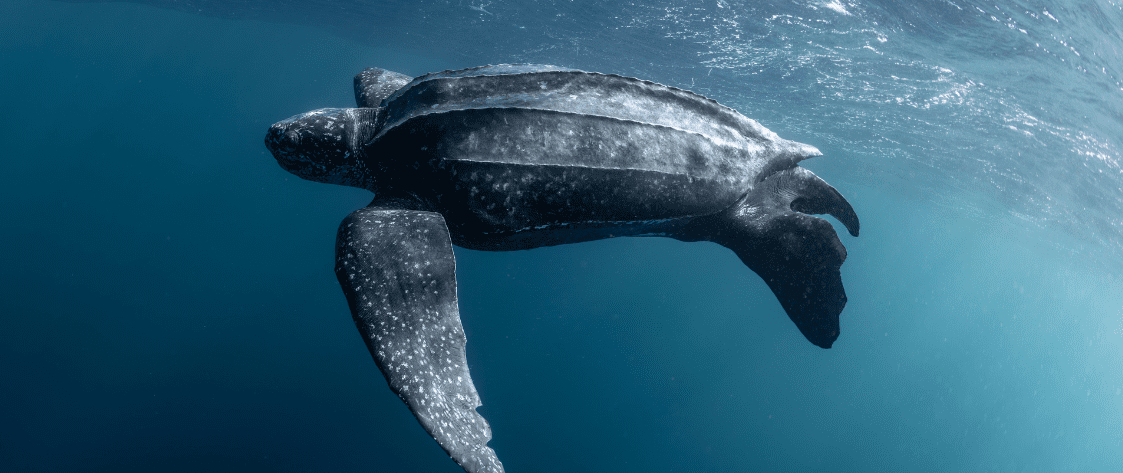
The leatherback is the largest turtle in the world — and one of the most extraordinary. Unlike other sea turtles, it doesn′t have a hard shell. Instead, it sports a leathery shell with seven pronounced ridges which, along with their large flippers, helps it undertake the longest migration of all sea turtles.
Leatherbacks can grow up to 2.1 meters (7 feet) long and weigh as much as 900 kilograms (2,000 pounds). Their streamlined bodies are built for endurance, with powerful flippers that can span around 2.7 meters (8.9 feet) and propel them through migrations of thousands of miles between tropical nesting beaches and cooler, prey-filled waters.
Unlike other sea turtles, leatherbacks feed on gelatinous prey like jellyfish and salps. Because of their special diet, the sea turtles′ mouth and throat are full of backwards-pointing spines to help keep their soft-bodied prey down after consuming it. In their search for food, leatherbacks go to extreme lengths – traveling to sub-polar waters colder than any other sea turtle can tolerate and diving to depths up to 1,219 meters (4,000) feet, deeper than any other sea turtle can go. They can handle colder waters thanks to specialized network of blood vessels, called a counter-current exchange, that allows them to maintain a body temperature higher than the water temperature around them9.