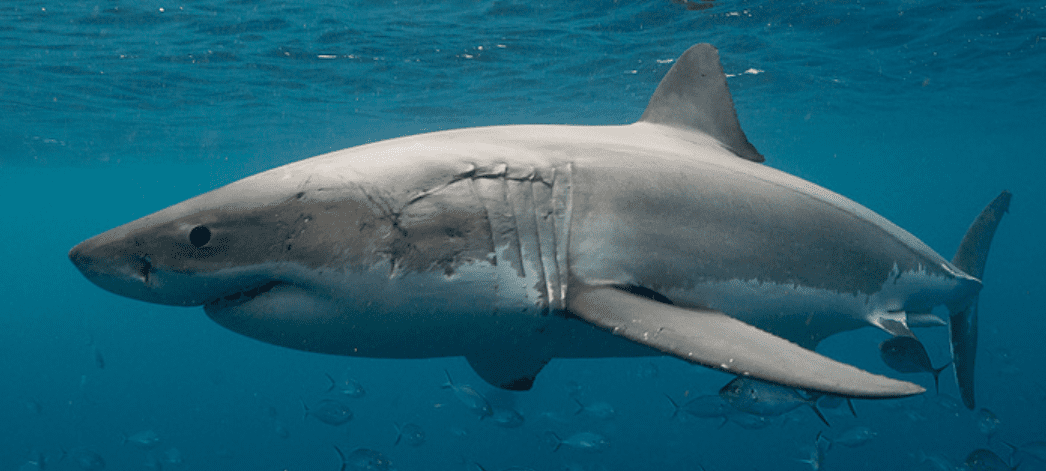
The white shark, perhaps more commonly known as the great white shark, is one of the most iconic and recognizable animals in the ocean. Named for their stark white underbelly, this apex predator is one of the largest species of sharks, thought to be able to grow up to 6 meters (20 feet) long.
Found in coastal waters and open oceans around the world, great white sharks feed on a variety of prey, including fast, warm-blooded mammals like seals and sea lions, as well as fishes, other sharks, and squid. Unlike most fish, they possess a unique physiology that allows them to maintain a body temperature that is higher than the surrounding water. This adaptation enables these sharks to stay active in cold waters, giving them an advantage when hunting. As apex predators, white sharks play an important role in regulating these prey populations, helping to ensure a health balance in marine ecosystems.
White sharks may live to be over 70 years old and don′t reach maturity until into their late 20′s or early 30′s. Females give birth approximately every three years, with litter sizes reportedly ranging from 2-12 pups. These pups are already about four feet long when they are born. Because white sharks live so long and reproduce so slowly, they are especially vulnerable to human-made threats.